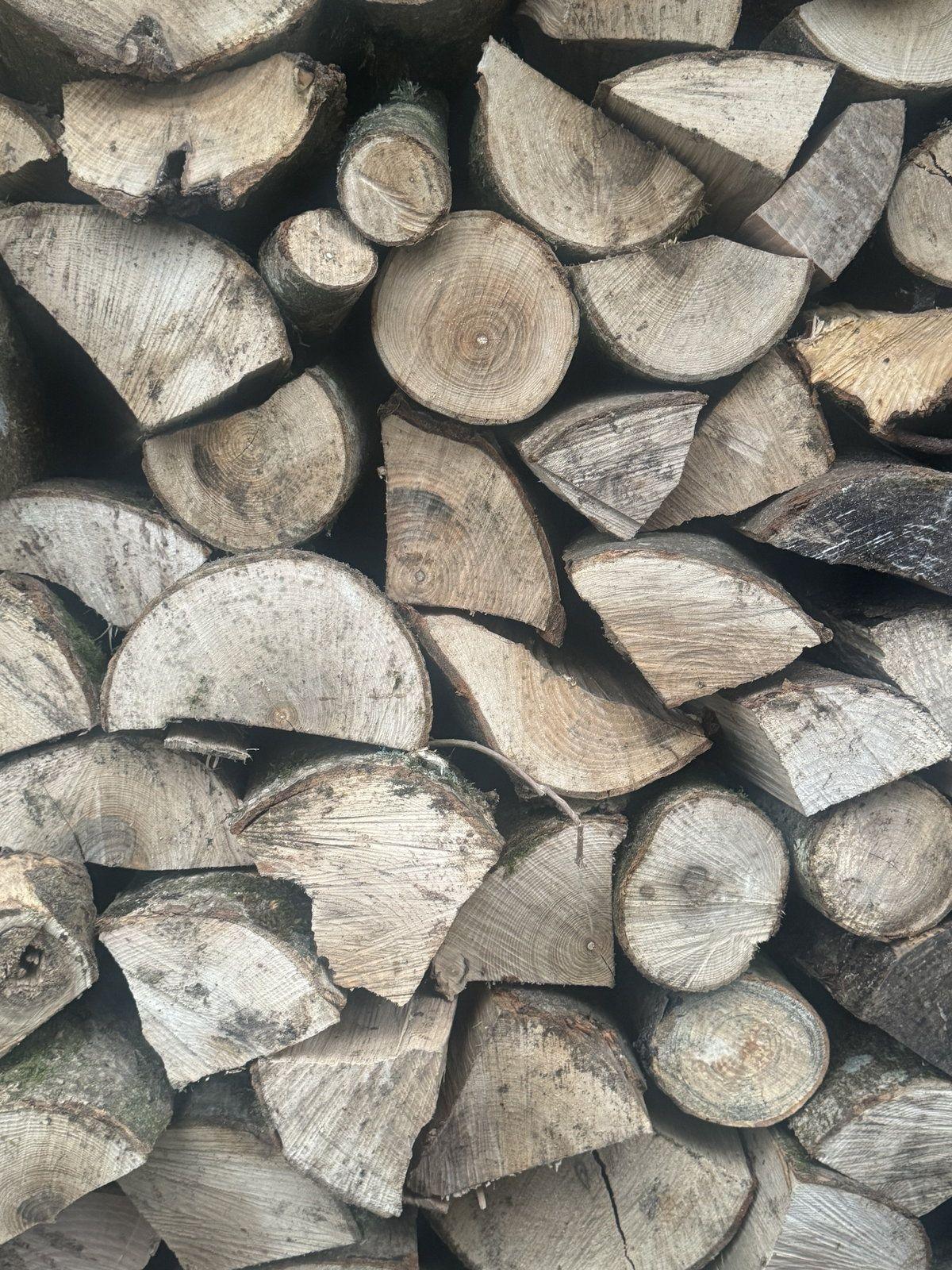
Why moisture content matters
- Freshly felled wood can be 50% water or more. Burning it means much of the energy goes into drying the wood rather than heating your room.
- Logs at 20% moisture or less give more heat, light more easily and produce far less smoke and particulate pollution.
- Wet wood causes tar and creosote to build up in the chimney, which increases the risk of a chimney fire.
- A cheap moisture meter is the easiest test: split a log and measure the freshly split face, not the outside.
- Other signs of dry wood: cracks across the ends, bark that comes away easily, a lighter weight and a hollow knock when two logs are struck together.
The Ready to Burn rules in England
- Under the Air Quality (Domestic Solid Fuels Standards) (England) Regulations 2020, wood sold in volumes under 2 cubic metres must be certified Ready to Burn, meaning 20% moisture or less.
- Wet wood can still be sold in volumes of 2 cubic metres or more, but it must come with advice on how to dry it before burning.
- If you live in a smoke control area, you must burn an authorised fuel or use a Defra-exempt appliance. Many towns in Surrey are smoke control areas, so check with your council.
- The rules apply to sellers. As a buyer, the simplest step is to ask your supplier how the wood was seasoned and what moisture it tests at.
Which wood burns best?
- Hardwoods such as oak, ash, beech, birch and sweet chestnut are dense, so they burn longer and give more heat per log than softwoods.
- Oak burns slowly and hot but needs longer to season, often two years once split.
- Ash and beech are excellent all-round firewood. Birch lights easily and burns brightly, but faster.
- Sweet chestnut burns well in a closed stove but tends to spit in an open fire.
- Softwoods such as pine and larch light quickly and make good kindling, but burn fast and need more frequent loading.
- Never burn painted, treated or pallet wood, or household rubbish. They release harmful fumes and can damage your stove and chimney.
- Kiln dried logs are dried in a kiln to below 20% moisture and are ready to burn on delivery. Seasoned logs are air dried, which takes longer but uses less energy.
How much firewood will I need?
- It depends on your stove, your house and how often you light it. A household using a stove most evenings through the winter typically uses several cubic metres a season.
- Logs are usually sold loose (tipped) rather than stacked. A loose load takes up more room than the same wood stacked neatly, so allow roughly a third less space once stacked.
- Buying a larger load ahead of winter and storing it well usually works out cheaper than topping up in small bags.
How to store firewood so it stays dry
- 01
Choose the spot
Pick a sunny, breezy spot, ideally against a south or west facing wall, so air and sun keep the logs drying.
- 02
Raise it off the ground
Stack on pallets, bearers or a log store floor so the bottom logs don't draw up ground moisture.
- 03
Stack bark side up
Stack loosely with gaps for air, bark side up on the top layer so rain runs off.
- 04
Cover the top only
Keep the top covered with a roof or sheet, but leave the sides open. Wrapping logs fully traps moisture and causes mould.
- 05
Bring logs in ahead of time
Keep a day or two of logs indoors near the stove so they're at room temperature and fully dry when you light them.
Frequently asked questions
Need seasoned logs or kindling delivered?
Free site visits across Surrey & Sussex. Tell us about your project and we'll be in touch.